


.svg)


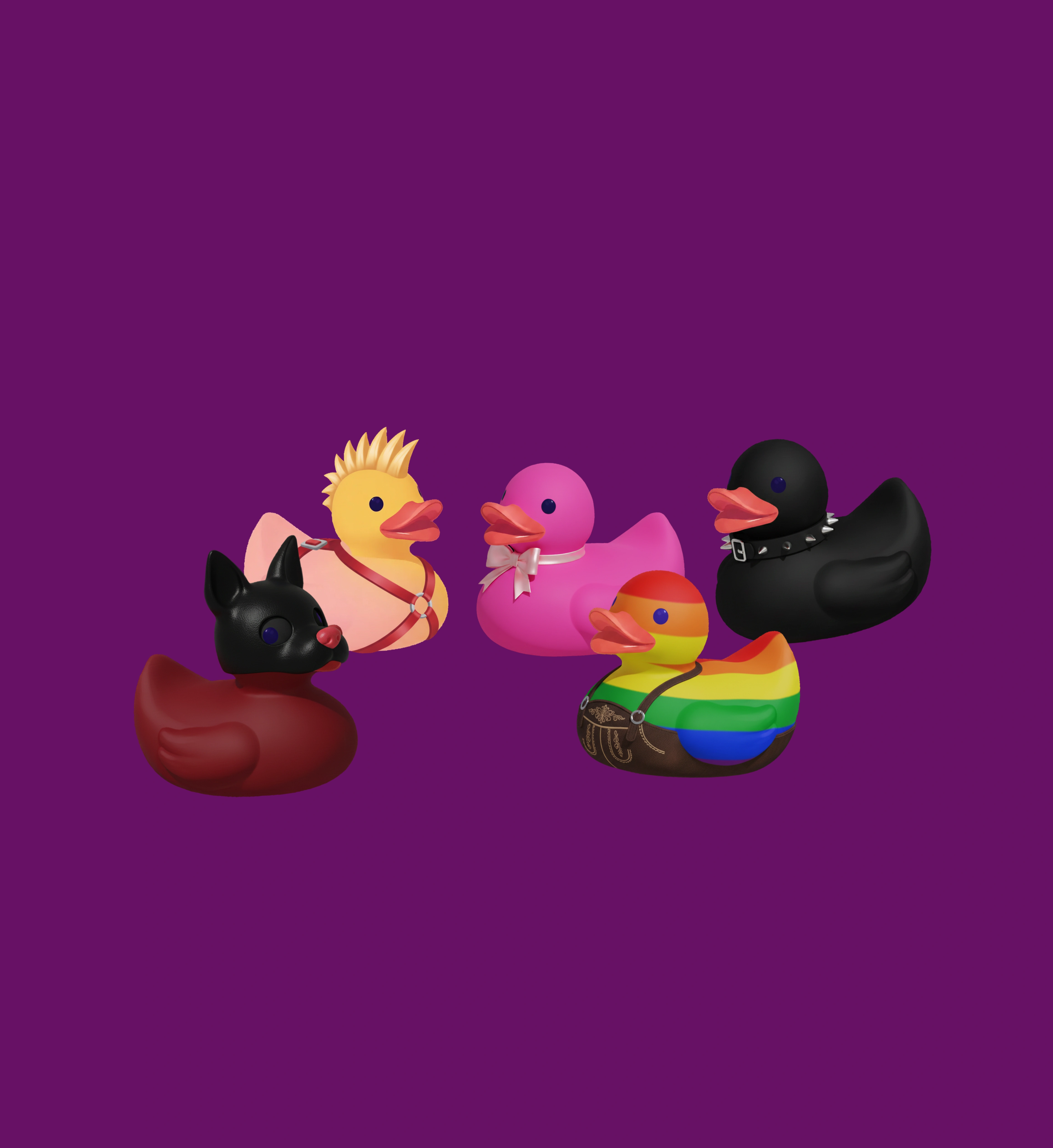
You've seen all three words. You've probably used them interchangeably. And if someone asked you to explain the difference on the spot, you'd probably do what most people do: wave your hand vaguely and change the subject.
Fair. No one really teaches this stuff. So let's fix that.
They're not the same thing
Here's the short version:
A kink is anything you find hot that's a little outside the mainstream. It's a big, baggy category. The bar is low. Role-playing? Kink. Enjoying being blindfolded? Kink. A preference for a very specific kind of touch? Also a kink. If it's a little non-normative, it probably qualifies.
A fetish is more specific. It's an intense attraction to a particular object, material, or body part — something that isn't inherently sexual but has become central to arousal. Leather. Feet. Latex. The word actually comes from the Portuguese feitiço, meaning a charm or magical object, which is honestly quite apt. A fetish isn't just "That sounds fun." It's more like "I really, like really, am turned on by this specific thing."
BDSM is different again. It's an umbrella term for a set of practices: Bondage and Discipline, Dominance and Submission, Sadism and Masochism. But BDSM isn't defined by what turns you on, it's defined by how you play. You can be into BDSM with no fetishes at all. You can have a fetish and zero interest in BDSM. The two aren't the same circle.
More common than you think
Research suggests between 5 and 25% of people have engaged in some form of BDSM-related activity. That's not a fringe number — that's your colleagues, your neighbours, your very normal-seeming friends. Kinky and fetishistic interests show up across all ages, demographics, and relationship types. The reason it feels rare is simply that people don't talk about it.
The one thing that makes BDSM work: consent
BDSM has its own frameworks for making sure everyone involved is genuinely on board. The two most common are SSC (Safe, Sane and Consensual) and RACK (Risk-Aware Consensual Kink). In practice, this means: you talk before, you check in during, and you have a safeword. That's what separates BDSM from harm. The consent isn't a technicality. it's the whole point.
How they all fit together
Here's a real-life example. Imagine Sam and Max kinksters (they identify as kinky people) and they are into BDSM practices. In their relationship, Sam has a kink for being submissive; they love acts of service, following instructions etc. Max, meanwhile, has a fetish for feet. So in a scene together, Sam massages Max's feet. Sam gets to be in their favourite role. Max gets their specific erogenous zone touched.
They talked about it beforehand, they both have a great time and everyone goes to bed happy. A perfectly pleasurable evening between two consenting adults. Good for them!
A note on curiosity
Having a kink doesn't mean you're compelled to act on it. Having a fetish isn't a disorder. Clinically, it only becomes one if it causes you real distress or harm. And being curious about any of this doesn't say anything definitive about who you are or what you want long-term. Curiosity is just curiosity.
The only thing that makes this territory feel complicated is the silence and taboo around it. Once you have the vocabulary, it's a lot less intimidating than it sounds.
Want to explore gently? Melba's Power and Control sessions are a good place to start. Enjoy some guided, low-pressure, and designed for couples who are curious but not sure where to begin.

.svg)
